Business Case
Background
In surgery, vision is everything. Surgical loupes—lightweight magnifying glasses worn on the head—give surgeons an enlarged, detailed view of the operative field. They are standard in open procedures across plastic and reconstructive, orthopedic, vascular, ENT, cardiothoracic, and dental surgery, where millimeter-level precision matters.
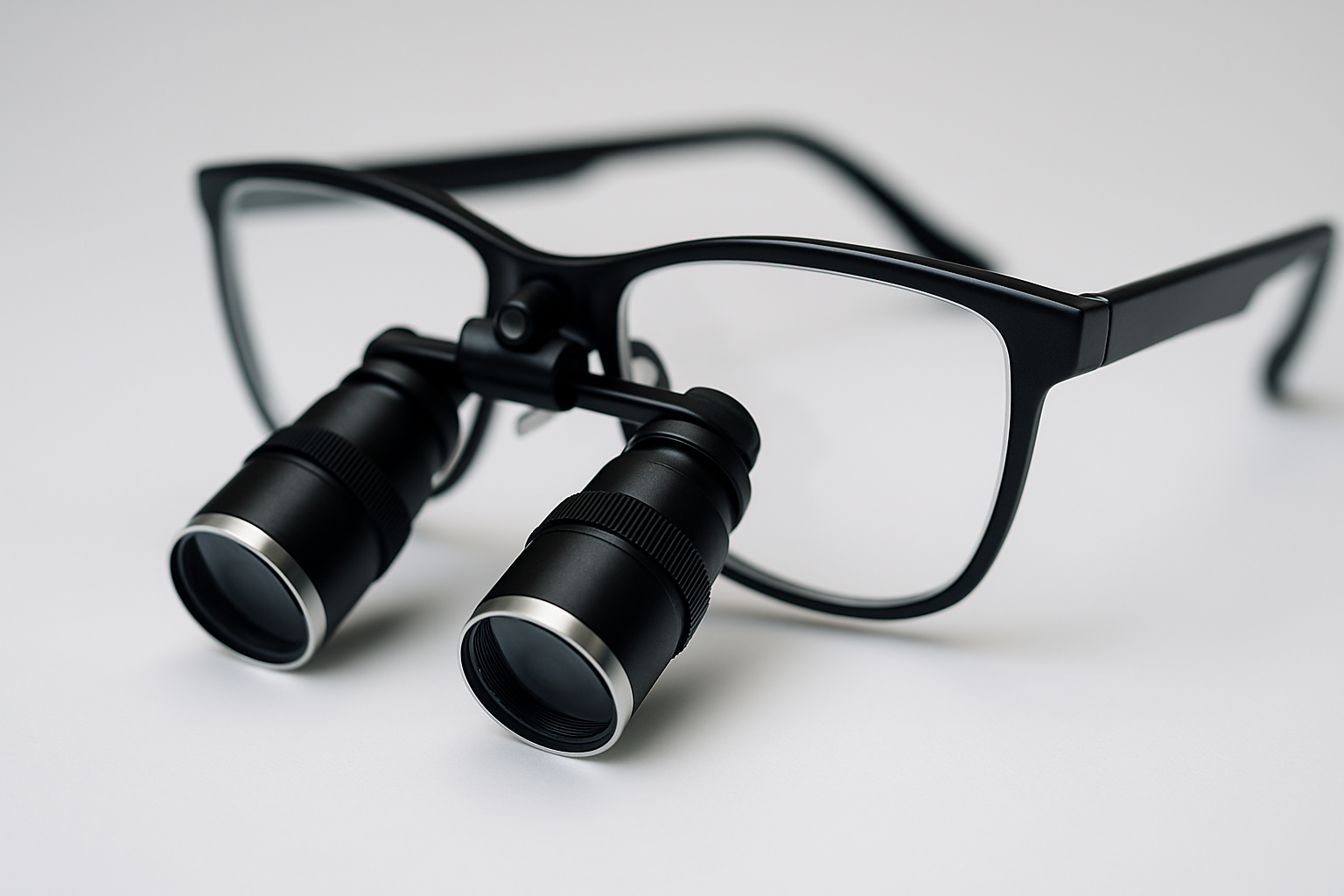
Despite their ubiquity, loupes have seen little meaningful innovation in decades:
- They force unhealthy posture (neck flexion ~30-40°), driving neck, shoulder, and back pain in a large share of surgeons.
- Fixed optics restrict field of view and require workflow interruptions to change magnification.
- Only the surgeon sees the field, limiting real-time team coordination and teaching.
The stakes are especially high in Canada and the United States, where surgical demand is rising and clinician shortages are projected to grow. Canada anticipates a nationwide physician shortfall by 2031, and the U.S. is projected to face a surgeon shortfall of roughly 10,100-19,900 by 2036. Extending surgeon careers, reducing fatigue, and improving OR efficiency are essential to sustaining capacity.
Problem Statement
- Prolonged neck flexion drives musculoskeletal strain, lost OR days, and shortened careers.
- Static magnification and narrow FOV force workflow pauses and reduce situational awareness.
- No built-in way to share the surgeon's POV with assistants/trainees in real time.
- Dependence on dyes/contrast adds time, consumables, and cost.
- Little support for modern education or data-driven improvement.
Needs Analysis
Surgeons and OR teams need loupes that:
- Protect posture to reduce musculoskeletal strain and extend careers—critical in regions facing surgeon shortages.
- Expand optical flexibility—wide field when needed, high magnification on demand—without breaking surgical flow.
- Enable real-time sharing of the operative view for tighter team coordination and teaching.
- Enhance recognition of anatomy without reliance on dyes/contrast.
- Capture data (surgeon-eye video) to support training, research, AI, and robotics.
Value Proposition
LIDDE Loupes are surgical loupes built for today's OR—comfort, clarity, and control with measurable impact:
- Comfort (Ergonomics): Reduce neck flexion by ~50% (e.g., ~35° → ~15-20°), addressing widespread loupe-related pain and protecting career longevity.
- Clarity (Optics): Wider FOV and dynamic magnification cut interruptions. Conservatively 3-5 minutes saved per case from fewer swaps/adjustments—freeing ~33 hours per surgeon at 400 cases/year.
- Collaboration (Team View): Low-latency POV sharing helps the whole team see what the surgeon sees—reducing miscommunication and keeping cases moving when seconds matter.
- Efficiency (OR Economics): With OR time often valued around $30-$100 per minute, saving 5 minutes per case yields $150-$500 recovered per procedure. At 25-50 cases/year, that's roughly $5,000-$25,000 per surgeon annually—before factoring dye/contrast reductions or avoided repeats.
- Education: Real-time surgeon-eye view accelerates training and reduces reliance on expensive exoscope setups; recordings enable case review and skills development.
- Future-proof Data: Built-in image/video capture creates surgeon-eye datasets that can fuel AI tools, robotic guidance, and clinical research—creating institutional value beyond hardware.
With LIDDE Loupes, surgeons gain comfort, clarity, and control—so they can operate longer, see sharper, and easily communicate with their team. Ultimately, LIDDE Loupes help surgeons operate at their best—for themselves, their teams, and their patients.
Roadmap
The Team & Support
Our Team

Chelsea Dmytryk
Software

Natalie Tsang
Software

Nicholas Drazso
Mechatronics

Lili Strong
Electrical
Nathan Rowe
Electrical
Advisors and Partners
- Stephen L.Smith, PhD, PEng, ASL Lab @ UWaterloo, Dept. Electrical and Computer Engineering
- Behrad Khamesee, PEng, Director of Maglev Microrobotics Lab, Dept. Mechanicala and Mechatronics Engineering
- Jeffrey Lee, MASc Student, Human-Robot Interaction and Artificial Intelligence Lab
- Dr. Victor Tsang, General, Hernia and Paraoscoptic Surgery, Proctology and Colonoscopy Specialized Surgeon (Click here for his website)
Sponsors
To be announced.